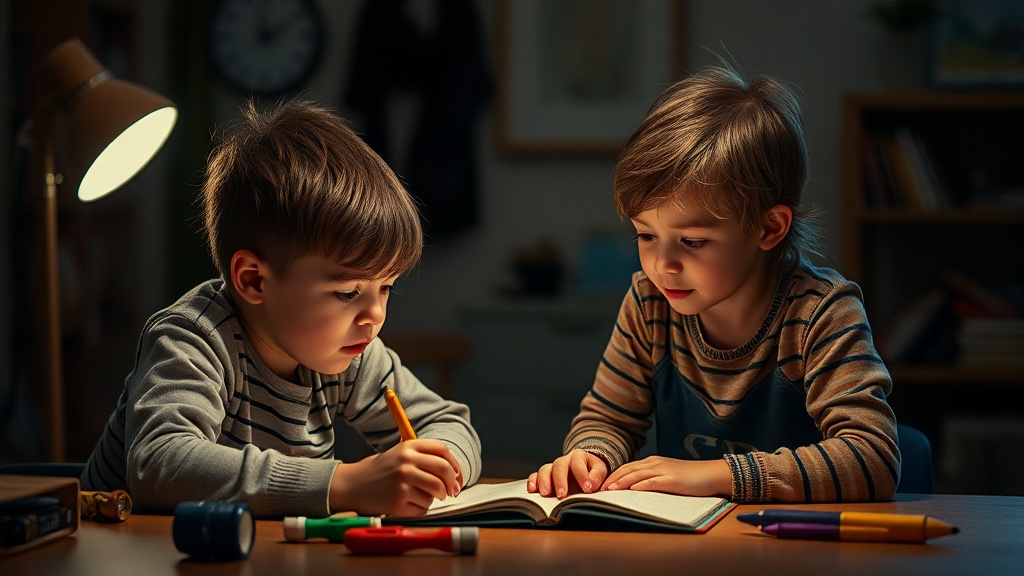
Why Good Parents Let Their Kids Get Bored (And Why That's Okay)

What If Constant Entertainment Is Actually Holding Your Child Back?
Most parents believe their job includes filling every moment with stimulation—activities, screens, crafts, outings. We've internalized the idea that a bored child signals parental failure. But here's the uncomfortable truth: your constant intervention might be doing more harm than good.
Children need boredom. Not the passive, scrolling-through-YouTube kind, but the genuine, unstructured downtime where they face an empty afternoon and must generate their own engagement. This guide explores why stepping back fosters creativity, how to restructure your approach without guilt, and what independent play actually looks like in practice. If you've been exhausting yourself trying to be your child's full-time entertainment director, the research might surprise you.
What Does Science Say About Boredom and Child Development?
The American Academy of Pediatrics emphasizes unstructured play as fundamental to healthy development—not optional, but essential. When children experience boredom, their brains don't shut down. Instead, they activate what researchers call the "default mode network," a neural pathway responsible for imagination, problem-solving, and self-reflection.
Dr. Brenna Hicks, a pediatric mental health specialist, notes that children who never experience boredom struggle to develop internal stimulation capabilities. They become dependent on external inputs—parents, screens, scheduled activities—to regulate their emotional states. That's not a minor inconvenience; it's a developmental gap with lasting implications for attention span, creativity, and emotional resilience.
Consider what happens when your child announces, "I'm bored." Your instinct screams to fix it—suggest an activity, pull up a show, organize a playdate. But that moment of discomfort? It's where the magic happens. Boredom forces the brain to seek novelty internally rather than externally. It prompts your child to look around their environment, spot opportunities, and generate ideas. Without that pressure, those mental muscles never develop.
A study published in the journal Personality and Individual Differences found positive correlations between boredom proneness and creativity scores. Children who regularly experienced—and worked through—boredom demonstrated higher divergent thinking abilities. They generated more unique solutions to problems and showed greater flexibility in their thinking patterns.
How Do I Stop Feeling Guilty About Not Entertaining My Kids?
The guilt is real. You love your children. You want them happy, engaged, thriving. When they're complaining about having nothing to do, it triggers something primal—the sense that you're failing to provide. But let's reframe what "providing" actually means in a parenting context.
Providing isn't performing. You're not a cruise director, and your home isn't a floating entertainment complex. Your actual job involves creating conditions where your child develops competence, autonomy, and internal resources. Sometimes that means being present and available. Other times—it means being busy with your own life while they figure things out.
Guilt often stems from comparison. You see Instagram parents crafting elaborate sensory bins and organizing educational field trips. You hear about neighbors enrolling kids in Mandarin immersion and competitive robotics. The cultural narrative suggests that more engagement equals better parenting. It doesn't. Quality parenting includes strategic withdrawal—moments where you trust your child's capacity to self-direct.
Start small. When your child announces boredom, respond with: "That's frustrating. I wonder what you might do about it?" Then—this is the hard part—don't rescue them. Walk away. Make your coffee. Answer your email. Let the discomfort exist. The first few times will feel terrible. Your child might escalate—whining, following you around, inventing crises. Stay the course. Within 15-30 minutes (sometimes longer for children unaccustomed to self-directed play), something shifts. They pick up a book. They build a fort. They start talking to themselves in character voices. The transformation isn't immediate, but it's reliable.
What Should I Actually Do When My Child Says They're Bored?
The phrase "I'm bored" rarely means what it appears to mean. Sometimes it signals genuine overwhelm—the child has too many options and can't decide. Sometimes it masks another emotion—loneliness, anxiety, or a need for connection. And sometimes—honestly—it's a test to see if you'll drop everything and perform.
Your response should vary based on context, but here's a framework that works:
First, validate without fixing. "Being bored feels uncomfortable. I remember that feeling." This acknowledges their experience without making it your problem to solve. You're on their team, but you're not their employee.
Second, offer a limited menu of starter ideas—not solutions. Not "Why don't you build a Lego castle and then we can bake cookies and then..." That's overwhelming and directive. Try: "You could create something, move your body, or find a quiet activity. I'm curious what you'll choose." This provides structure without content, which is exactly what an overwhelmed brain needs.
Third, get busy yourself. The most powerful predictor of a child's independent play is seeing their parent engaged in autonomous, satisfying activity. If you're scrolling Instagram while claiming to be "busy," they know. But if you're genuinely absorbed—reading, gardening, working on a project, exercising—something clicks. They recognize that independent engagement is normal, valuable, and available to them too.
The National Childbirth Trust emphasizes that parental modeling of independent activity teaches children that self-direction is a legitimate way of being—not something to endure until the adult returns with structured entertainment.
Creating an Environment That Supports Independent Play
Your home setup matters. If every toy requires batteries, adult assembly, or close supervision, independent play becomes impossible. If toys are stored in complicated organizational systems that require your assistance to access, you've created dependency.
Simplify. Rotate toys so fewer options exist at once—paradoxically, fewer choices increase engagement. Prioritize open-ended materials: blocks, art supplies, dress-up clothes, cardboard boxes, loose parts. These transform based on your child's imagination rather than dictating specific play scripts.
Make spaces accessible. Put art supplies where they can reach them. Store books at their level. Create a "yes space"—an area where they can explore without constant correction or intervention. When the environment invites independent exploration, boredom becomes a gateway rather than a wall.
The Screen Time Complication
We can't discuss modern boredom without addressing screens. Tablets and phones offer frictionless entertainment—the perfect solution to a complaining child. But screens create a dopamine feedback loop that makes offline activities feel impossibly dull by comparison.
Children accustomed to high-stimulation screen content genuinely struggle to engage with slower, self-directed play. The transition period after removing screens is brutal—expect whining, negotiating, and claims that "nothing is fun anymore." This isn't evidence that they need screens; it's withdrawal from a powerful stimulus.
Establish clear boundaries. Many families find success with designated screen times (after independent play, not before) or screen-free days. The key is consistency—ambiguity creates constant negotiation and keeps the brain hoping for that easy dopamine hit.
When Should I Actually Engage With My Child?
Stepping back doesn't mean abandoning connection. Children absolutely need focused, present attention from parents. The distinction lies in quality versus quantity—and in recognizing that not all interaction counts equally.
Engage deeply during connection times: family meals, bedtime routines, dedicated one-on-one time where they choose the activity and you follow their lead. Then—disengage with confidence. Your child needs both modes: intense connection and independent exploration. Neither works well without the other.
Watch for genuine distress signals. Boredom looks different from anxiety or sadness. A bored child might sigh, wander, or complain. An anxious child might exhibit physical symptoms, sleep disruption, or persistent clinginess. Know your child. Trust your instincts. But don't mistake "wanting entertainment" for "needing support."
The goal isn't neglectful parenting—it's responsive parenting that recognizes your child's growing competence. Every time you resist the urge to rescue them from boredom, you're communicating trust. You're saying: "I believe you have ideas. I believe you can handle this feeling. I believe in your creativity." Those beliefs become self-fulfilling prophecies.
Your child will not remember every craft you organized or every outing you planned. They will remember how you made them feel—capable, trusted, resourceful. The best gift isn't constant entertainment. It's the confidence that they can entertain themselves.