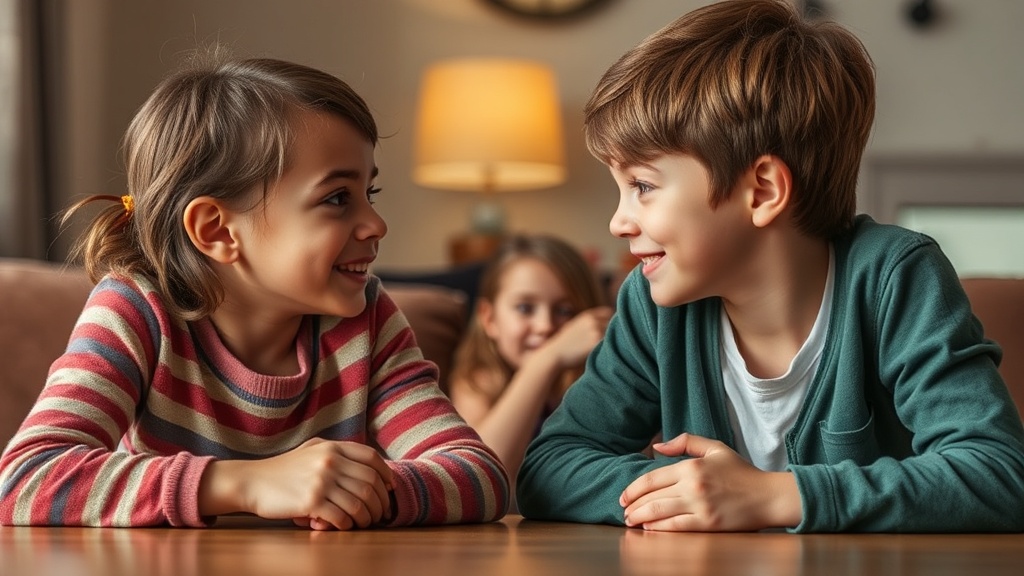
Navigating Sibling Squabbles: Practical Approaches for a Calmer Home

Navigating Sibling Squabbles: Practical Approaches for a Calmer Home
Imagine the familiar sound: a shrill cry erupts from the living room, followed by shouts of "Mine!" and "No, it's my turn!" You walk in to find two small faces contorted in frustration, one clutching a toy, the other pointing accusingly. Sibling squabbles are a near-universal experience for families with more than one child. They can test your patience, fray your nerves, and leave you wondering if peace is an impossible dream. This post isn't about eliminating conflict entirely — that's an unrealistic expectation for developing humans sharing space. Instead, we'll explore practical, mindful approaches to de-escalate those inevitable clashes, teach children valuable conflict resolution skills, and ultimately cultivate a more harmonious home environment. Understanding why these disagreements happen and having a clear framework for responding can make all the difference, transforming moments of discord into opportunities for growth and stronger family bonds.
Why Do Siblings Fight—and How Can We Understand Their Conflicts Better?
Sibling rivalry often stems from a complex interplay of developmental stages, individual temperaments, and the natural competition for parental attention and resources. A toddler might lash out when a younger sibling touches their treasured block tower, not out of malice, but because their developing sense of ownership is still quite absolute. Their world, at that moment, revolves around "my." An older child, conversely, might feel displaced or jealous of the attention a new baby receives, even if they adore their younger sibling. These feelings are normal, if sometimes inconvenient.
Children inherently seek their parents' affirmation and affection. When they perceive a scarcity of these—or simply want more of them—they might compete, sometimes aggressively. It's not always a conscious choice; sometimes, even negative attention feels better than no attention at all. Understanding this dynamic can shift our perspective from seeing "naughtiness" to recognizing an unmet need for connection or validation. Each child is also striving to establish their own unique identity within the family. "I'm the funny one," "I'm the smart one," "I'm the strong one." This pursuit of individuality can lead to jockeying for position, especially if they feel pigeonholed or constantly compared to a sibling. Recognizing these underlying drivers helps us respond with greater empathy and effectiveness.
What Practical Steps Can Parents Take to De-escalate Sibling Disputes?
Knowing when and how to intervene in sibling squabbles is a finely tuned art. Not every skirmish requires immediate parental intervention; sometimes, children truly need the space to work through minor disagreements on their own. This helps them develop crucial negotiation skills and resilience. However, if physical aggression, sustained emotional distress, or a clear power imbalance is present, stepping in is absolutely necessary. The